
When Diagnosis Depends on Age, Not Biology
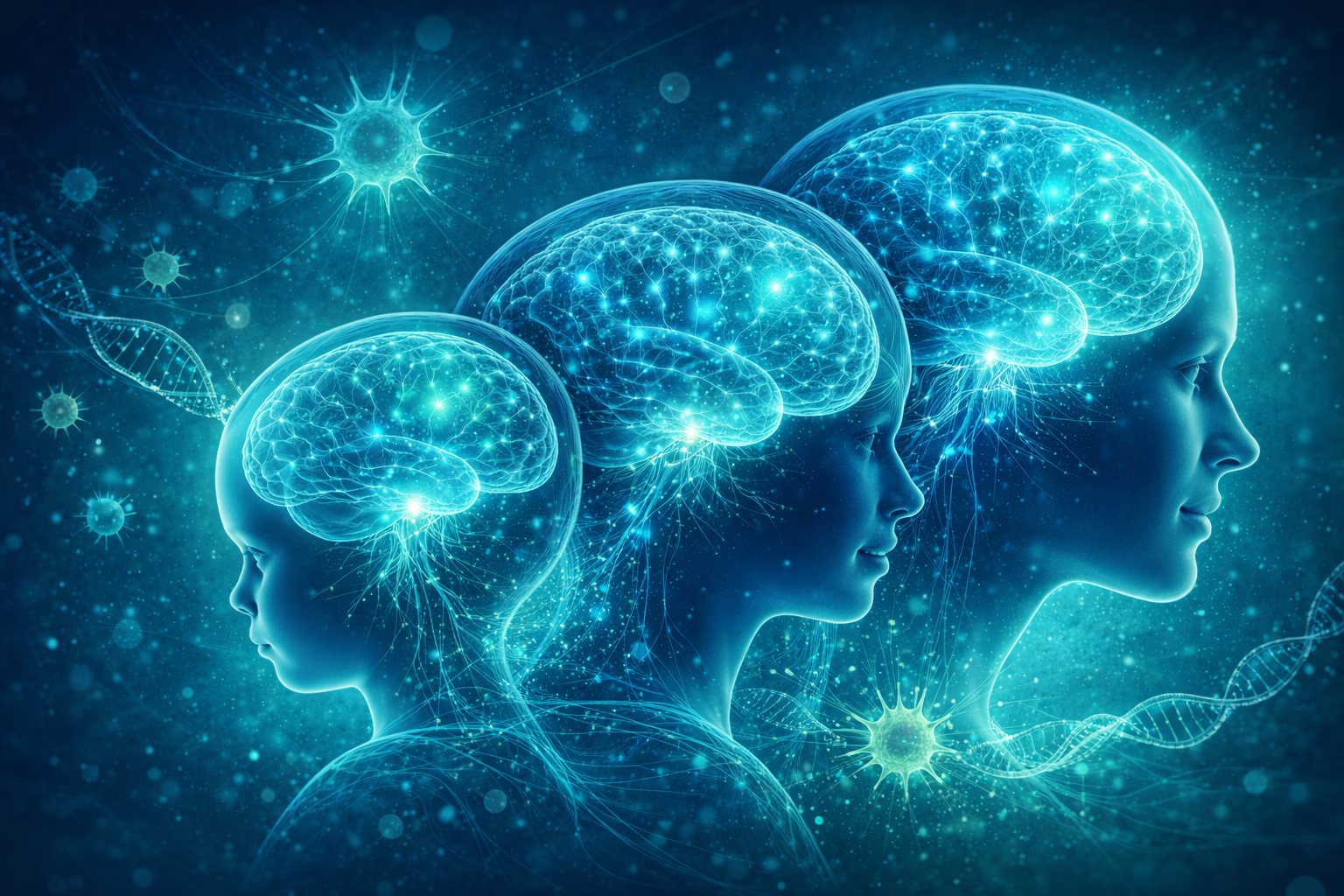
Most of modern medicine is built on tidy categories. We like to name things, separate them, and build services around them. Autism belongs here, PANS belongs there, Chronic fatigue sits somewhere else again… Each diagnosis has its own specialists, its own conferences, and its own story about what is happening in the body.
After years of working with children across all three groups, I no longer believe those divisions reflect biological reality.
Instead of seeing these as three separate conditions, I see the same neuroimmune illness appearing at different points in development. The age of the brain determines how that disturbance is expressed, but the underlying physiology is strikingly similar.
This is not a comfortable idea; it challenges established narratives, particularly around autism. Yet, it comes from what shows up repeatedly in clinical work. Once you see it, it becomes impossible to unsee.
HOW THE SAME BIOLOGY SHOWS UP AT DIFFERENT AGES
When immune dysregulation and neuroinflammation occur very early in life, while the brain is still building foundational networks, the child may lose or fail to develop language, social engagement or sensory integration. That presentation is labelled autism.
When the same process occurs later, after development has been established, core skills are already in place. What emerges instead is abrupt psychiatric and neurological change: OCD, tics, emotional volatility, rage, food restriction and school refusal. This cluster is labelled PANS.
When it appears later still, after the major phases of brain development, the picture looks different again.
Relentless fatigue
Cognitive fog
Autonomic instability
Pain
Post-exertional crashes
This is labelled chronic fatigue, ME or post-viral syndrome.
WHAT THESE DIVISIONS COST CHILDREN
Once a child is placed into a diagnostic category, everything that follows is shaped by that label. In autism, medical drivers are often assumed to be either irrelevant or untreatable. In PANS, the focus may become infection alone. In chronic fatigue, children are frequently left pacing symptoms rather than addressing physiology.
What actually happens is that care becomes fragmented. Children with the same underlying immune and metabolic disturbances are sent down entirely different pathways, depending not on biology but on when symptoms first appeared. Timing changes expression, but it does not change the mechanism.
WHY THIS VIEW IS SO CONTENTIOUS
This framing makes people uncomfortable for understandable reasons.
In the PANS world, there has been a strong and deliberate effort to distinguish PANS from autism. That separation has helped some children gain recognition and access to care, and it is easy to see why clinicians have defended those boundaries.
In the autism world, the discomfort is sharper. Autism is now widely framed through the lens of neurodiversity. For many individuals, particularly those who are well and functioning, that framework is valuable and affirming.
The difficulty arises when it is applied to children who are clearly unwell.
WHEN NEURODIVERSITY SILENCES MEDICAL NEED
There is nothing progressive about explaining suffering away. When regression, pain, insomnia, autonomic dysfunction, self-injury, OCD or loss of function are reframed as “just autism”, medical curiosity shuts down. Investigation slows or stops. Treatment is delayed or denied. Families are encouraged to accept rather than to question. That does not help children, and it leaves important medical questions unanswered.
Recognising shared neuroimmune mechanisms does not deny neurodiversity. It simply insists that biology still matters when a child is deteriorating.
WHAT YEARS IN CLINIC CHANGE
With experience, the work becomes less about labels and more about trajectories. You begin to recognise the same underlying immune, autonomic, and metabolic patterns across children with different diagnoses. Sometimes they are identified early. Sometimes later. Sometimes in more than one child within the same family. That recognition changes clinical decisions. It sharpens timing. It brings earlier intervention, clearer prioritisation, and more realistic conversations about what is driving symptoms. Most importantly, it changes outcomes.
When the underlying biology is identified and addressed, many children stabilise, regain lost ground, and move forward in ways that were not possible when care was organised purely around diagnosis.
WHY THIS MATTERS NOW
If we continue to treat these diagnoses as unrelated, care will remain disjointed and inconsistent.
If we recognise them as related expressions of neuroimmune dysfunction, treatment becomes more coherent.
IMPORTANT
This information is for educational purposes only and is not a substitute for professional medical advice diagnosis or treatment. Always consult with medical doctors or qualified functional medicine practitioners before introducing any new supplement, test, or intervention.
Concerned about your child's health? We are happy to talk.