
The Missing Piece in Post-Infection Flares
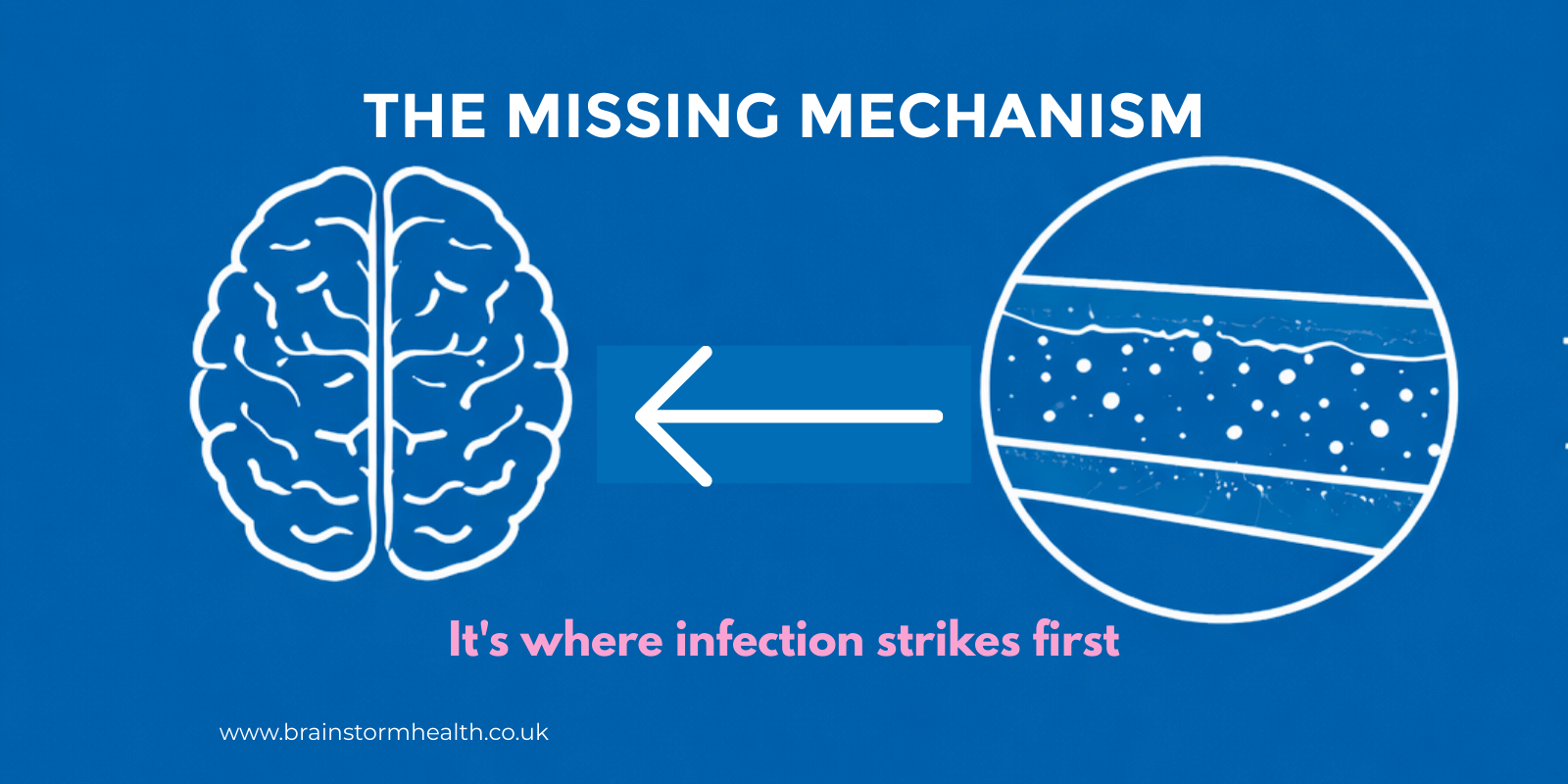
When a child flares after an infection, most people are told it's psychological.Anxiety. Behavioural. A difficult phase. Stress.Some are eventually pointed towards the immune system. Antibodies. Inflammation. Autoimmunity. Infection-triggered brain dysfunction.That immune model is closer to the truth. But I think something is still being missed at the very start of the sequence.In many post-infectious neuroimmune flares, the first thing to be affected is the lining of the blood vessels. It is one of the most active tissues in the body. It acts like a gatekeeper, controlling what gets into the surrounding tissue, what signals reach the brain, and how the immune system responds.When infection disturbs that lining, everything behind it can change very fast.
WHY THIS MATTERS
I see many children who do not look as though they are simply having a delayed immune response after infection.They look as though something has suddenly shifted in the regulation of the whole system. Sometimes the infection itself looked mild and the fallout is completely disproportionate.Here is why.
THE VESSEL LINING AND THE BRAIN
When infection disturbs that lining, it becomes leaky. Inflammatory molecules and immune signals that would normally be kept out start getting through.The blood-brain barrier - the structure that protects the brain from what circulates in the blood - is made of exactly the same type of lining. So when infection disturbs it elsewhere in the body, the same process is very likely happening around the brain.Not catastrophically. But enough.Enough for inflammatory signals to reach the brain more easily. Enough for the brain's own immune cells to become primed. Enough for mast cells to activate. Enough for blood flow and neural signalling to shift.
WHY SYMPTOMS CAN CHANGE SO FAST
A child can be manageable one day and unrecognisable the next.This is not slow immune remodelling. It is fast vascular signalling.Sudden agitation. Rage. Panic. Sensory intolerance. Insomnia. Cognitive fog. Tachycardia.That description parents give over and over: something has gone wrong overnight.
MAST CELLS SIT RIGHT BESIDE THE BLOOD VESSEL
Mast cells live close to blood vessels. They are part of the rapid response network.When that lining is stressed, mast cells fire. They release histamine, prostaglandins, tryptase and leukotrienes - which increase permeability further, which stresses the lining more, which fires the mast cells again.A loop forms.Lining stress triggers mast cells. Mast cells destabilise the lining further. The nervous system becomes more reactive. The flare escalates.This is why post-infectious children can look so volatile and so physically dysregulated at the same time. It is one loop driving both.
THE IMMUNE SYSTEM STILL MATTERS, BUT IT MAY NOT BE FIRST
This is not an argument against immune involvement.The immune system is deeply involved in post-infectious neuroimmune illness. Microglia matter. Cytokines matter. Autoantibodies matter. Persistent infections matter. Molecular mimicry matters.But the sequence is often misunderstood.The model many people hold is: infection, then immune activation, then brain symptoms.In reality the sequence may be more like this: infection disturbs the vessel lining, permeability shifts, mast cells activate, the brain's own barrier becomes more permeable, inflammatory signals reach the brain, behaviour changes fast.That is a different model. And it changes what you pay attention to.
WHY SOME CHILDREN ARE SO VULNERABLE
Not every child develops a major flare after infection.The children who tend to flare hardest are often the ones who already have instability in the terrain. Gut inflammation. Mast cell volatility. Oxidative stress. Mineral imbalance. Poor methylation capacity. Autonomic dysfunction. Mitochondrial strain. Chronic infection burden. Existing neuroinflammatory priming.In those children that lining is already easier to destabilise. The infection does not create the whole problem from scratch. It pushes an already vulnerable system over threshold.That is why one child shrugs off the same infection that sends another into weeks of OCD, rage, food restriction, insomnia, tics, panic, or loss of function.
WHAT THIS MEANS IN PRACTICE
Understanding this does not require a separate protocol. It changes how you sequence the one you already have.
The five pillars we work through in every case - infection control, inflammation management, mast cell stabilisation, adrenal support, and mineral adequacy - address exactly this terrain. But the order matters.
Mast cell stabilisation comes first. Before anything stimulating is introduced. In a child whose mast cells are already primed, anything that loads them further - high histamine foods, supplements introduced too fast, an unaddressed infection - will amplify the loop rather than calm it.
Infection must be addressed. But removing the trigger alone is rarely enough in a child whose lining was already fragile before the infection arrived. The terrain needs work too - and often it needs to come first.
Gut barrier integrity, mineral support, and reducing oxidative load all reduce the background strain. A child with an inflamed gut, depleted minerals, and high oxidative stress has very little reserve. The same infection another child shrugs off becomes a system-wide event.
Regulation before intervention. Stability before escalation.
If your child falls apart after every infection, there is a reason. The biology is real. The sequence is real. And when you understand where it actually starts, the path forward becomes a lot clearer.
IMPORTANT
This information is for educational purposes only and is not a substitute for professional medical advice, diagnosis or treatment. Always consult with medical doctors or qualified functional medicine practitioners before introducing any new supplement, test, or intervention.
Concerned about your child's health? We are happy to talk.
REFERENCES
Varatharaj, A. and Galea, I., 2017. The blood-brain barrier in systemic inflammation. Brain, Behavior, and Immunity, 60, pp.1-12.
Galea, I., 2021. The blood-brain barrier in systemic infection and inflammation. Cellular and Molecular Immunology, 18(11), pp.2489-2501.
Huang, X., Hussain, B. and Chang, J., 2021. Peripheral inflammation and blood-brain barrier disruption: effects and mechanisms. CNS Neuroscience and Therapeutics, 27(1), pp.36-47.
Hendriksen, E., van Bergeijk, D., Oosting, R.S. and Redegeld, F.A., 2017. Mast cells in neuroinflammation and brain disorders. Neuroscience and Biobehavioral Reviews, 79, pp.119-133.
Theoharides, T.C., Stewart, J.M., Panagiotidou, S. and Melamed, I., 2016. Mast cells, brain inflammation and autism. European Journal of Pharmacology, 778, pp.96-102.