
Case Study: Anxiety, Tics and a Village Bake Shed
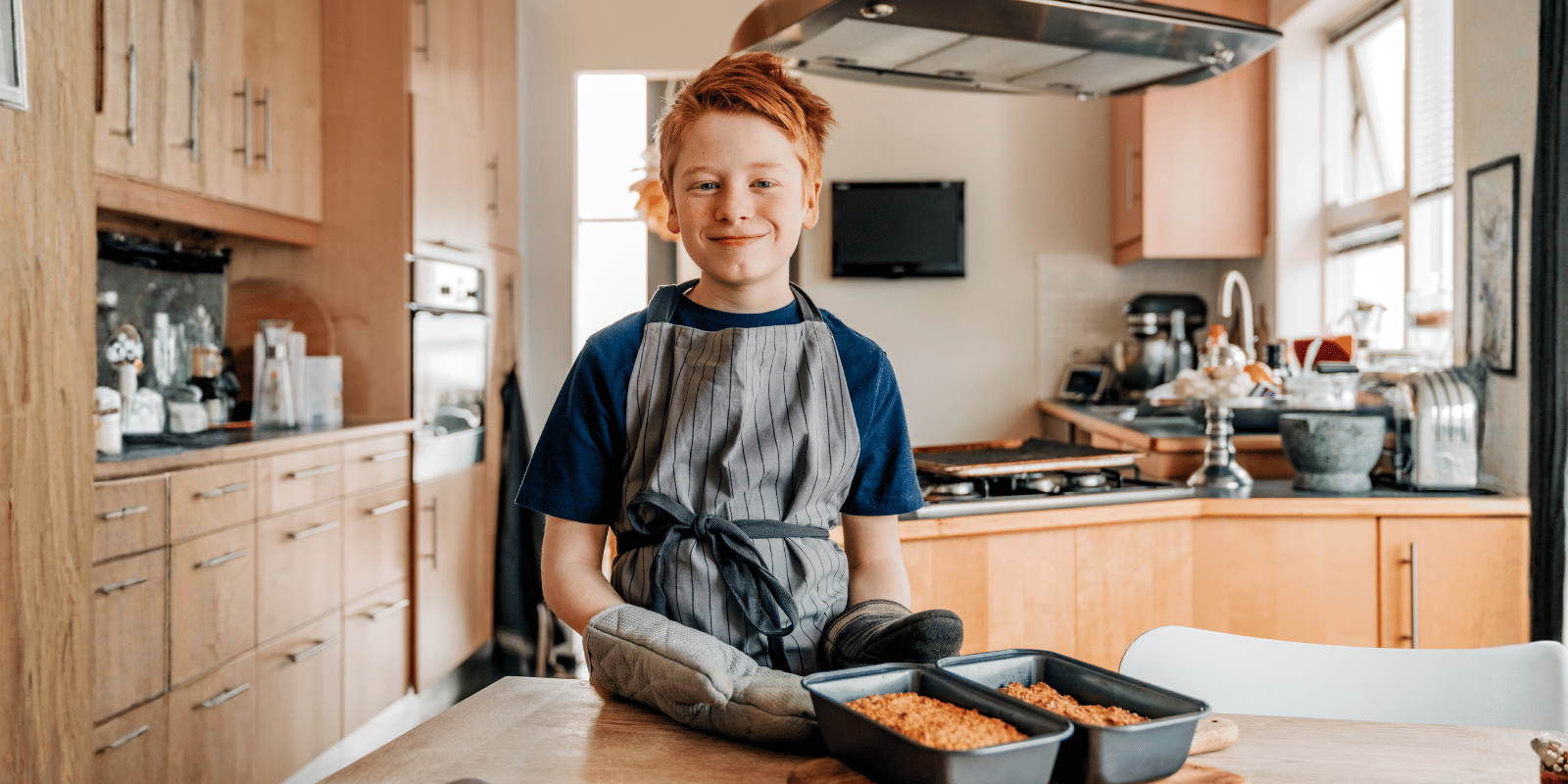
Benjamin is 13. He runs an "honesty bake shed" from his garden, selling baked goods to neighbours between his online lessons. He's completed a Food Hygiene Certificate, designed his own logo, worked out costings, and manages the business himself. He rides his bike around the village independently. His parents leave him home alone for hours without issue.
Six months ago, he couldn’t stay home alone for ten minutes.
His bedtime routine took over an hour. Objects had to be positioned exactly, both parents had to say specific phrases, and if he wasn't asleep within 15 minutes of 9 pm, he would panic. He experienced night terrors, which his parents described as something from a horror film. He had verbal tics - barking sounds, repeated words. Sensory sensitivities made even wearing shoes unbearable. In Year 5, he withdrew from mainstream school because he couldn't manage the classroom environment.
Before
Benjamin's family came to Brainstorm Health in September 2025. He was 13, and one of our practitioners, Emma, worked with him.The anxiety was severe. Generalised anxiety scored 7 out of 10. Separation anxiety was worse - 8 to 9 out of 10. He couldn't attend clubs independently or stay home alone. The "impending doom" feeling - intrusive, catastrophic thoughts - scored 9 out of 10.Sensory sensitivities affected multiple areas. Noise, crowds, and wearing shoes were all problematic. In Year 5, he had moved to online schooling because the classroom environment had become unmanageable.Verbal tics - barking sounds and repeated words - tracked his stress load and scored 9 out of 10. Sleep required rigid routines: specific objects positioned in order, set phrases from both parents, and significant distress if he wasn't asleep within 15 minutes.His gut symptoms followed a clear pattern. Abdominal pain would come with pallor, tremor and a woozy sensation. Then he would need the toilet. Relief was immediate after bowel movements. When his stomach hurt, his anxiety spiked. When he opened his bowels, the anxiety eased.
There had been two house moves, and both properties had mould. He was also exposed at his grandparents’ home in summer 2025. After a visit there that spring, he became unwell.
First Steps
We started with nervous system regulation and foundational support.
Topical interventions: Epsom salt soaks and castor oil packs
Magnesium, both oral and topical– Protein at breakfast to stabilise blood glucose, working within his restricted eating patternsWe ran comprehensive testing:
Metabolomix
Hair Mineral Analysis
DNA analysis
Environmental modifications were implemented. Water filtration, glass storage containers instead of plastic. Given his history of mould and how reactive he was, we had to reduce the environmental load.
Building the Foundations
By November, we were able to add more.
Minerals and electrolytes for nervous system support
Adrenal cortex to address HPA axis dysfunction
Vitamin D and K2 to support downregulated receptor function
Microimmunotherapy for immune regulation
Protein intake at breakfast remained challenging given his food restrictions. We introduced lower-histamine protein powder that could be added to drinks, then later suggested Russian ricotta pancakes as an alternative.
In November, his mother reported significant changes:
"The reduction in anxiety is what's incredible to see."
"The bedtime routine that used to take probably an hour between us now takes probably 5 or 6 minutes."
"He's getting dressed every day, which is completely new."
Benjamin himself said: "I've done a normal poo, I can't believe it."
The Missing Piece
By January, gut function had improved, sleep was better, and tics had reduced significantly. But underlying anxiety remained, with rigid thinking patterns that needed addressing differently.
Emma introduced Socratic questioning.
This isn’t therapy or formal CBT. It’s a way of speaking that helps a child notice their thoughts rather than automatically believe them.
Questions like "I'm curious what makes you think that?" or "I'm wondering if there's another way to look at this?" When asked gently, without pressure, they help a child slow down and think rather than react.
We also added targeted histamine support: grass-fed beef kidney capsules (later switched to DAO enzyme when he couldn't tolerate the taste), buffered vitamin C, and minerals.
By January, his mother reported: "Everything he's handling, it seems ten times easier for him than before."
Busy shops that previously triggered sensory overload were now manageable, sometimes even enjoyable.
By February
"He was out there at Benjamin's Shed chatting to the neighbours... he was very sociable with everybody."
He began riding his bike independently, initially with encouragement, then on his own initiative.
"He can sit in the normal chair at the dentist... he was absolutely fine."
"We leave him home alone now for one or two hours. He's not even bothered."
"Verbal and motor tics, I would say, had gone."
The symptom scores reflected the clinical progress:
Anxiety: 9 → 3
Separation anxiety: 8-9 → 3
"Impending doom": 9 → 1
Verbal tics: 9 → 1
Digestion: 7 → 2
Benjamin himself said: "I just think I'm nearly there," then added, "but I don't want to become like one of those really normal people."
His sense of humour, his identity, his confidence - all intact.
A Familiar Pattern
We didn’t chase symptoms. We kept asking what was underneath them.
Why was his immune system overreacting?
Why couldn’t he clear what was happening in his gut?
Why was his stress response so compromised?
None of this works without the family. We worked closely with them throughout, adjusting when something wasn’t landing and building on what was. His mother implemented every environmental change, found creative solutions for the protein issue, and used the Socratic questioning beautifully.
If your child has been unwell for months or years, if you've seen multiple specialists and nothing has worked, if you're told "it's just anxiety" or "they'll grow out of it" - Benjamin's story is for you.
We see this pattern often in clinic. It can change.We're here when you're ready.
Note: Name changed and stock photo used to protect anonymity
IMPORTANT
The information provided in this article is for educational purposes only and is not a substitute for professional medical advice, diagnosis, or treatment. It is crucial to consult with medical doctors or qualified functional medicine practitioners to address specific health concerns and obtain personalised guidance tailored to individual needs. Never add any supplements to your plan until it has been assessed and approved by your medical doctor or a suitable qualified practitioner who is familiar with your health history.
Concerned about your child's health? We'd love to have a chat with you.