
When Everything Unravels: Thiamine
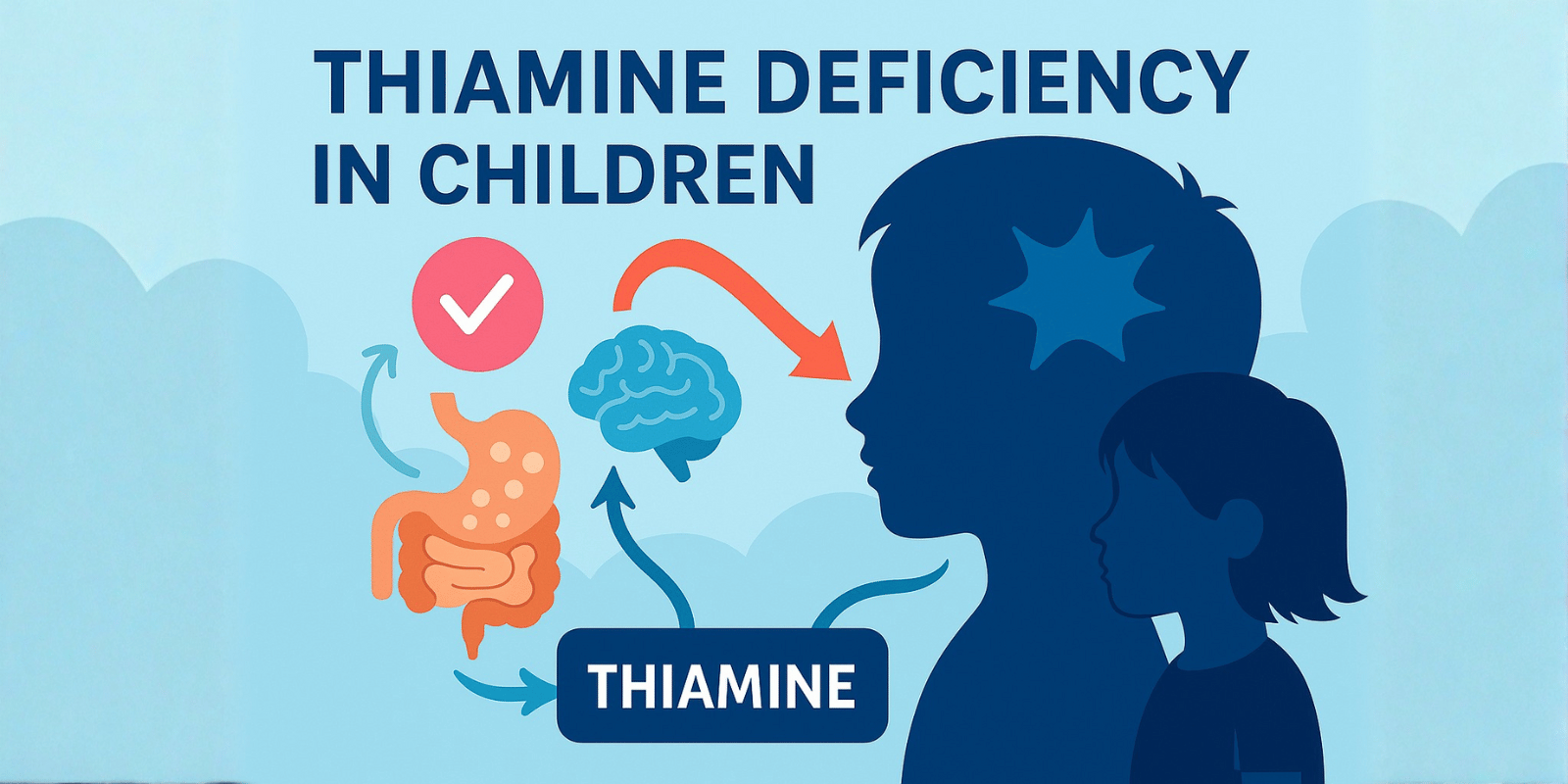
Thiamine is a small, unassuming vitamin, but it behaves like a master switch in a child’s body. When it is available, the brain, gut and immune system run with a kind of quiet efficiency. When it runs low, the cracks show quickly. Parents notice the shift long before a blood test ever will.
A child who was coping suddenly becomes irritable. Sleep becomes lighter, recovery after a simple cold stretches into days, small stresses trigger big reactions. This pattern appears over and over again in autism PANS and PANDAS.
Thiamine drives the enzymes that turn food into usable energy. It keeps the brainstem steady, anchors the autonomic nervous system, and supports mitochondrial function. When the supply falters, the body cannot keep its balance. As inflammation rises, behaviour and sensory tolerance begin to unravel.
What Thiamine Actually Does
Thiamine is vitamin B1. Once inside the cell, it switches into its active form and drives several key energy pathways. These pathways feed the mitochondria so they can produce ATP, the basic fuel every cell relies on. They also support the body’s antioxidant defences, helping keep inflammation under control.
When thiamine runs low, even slightly, the system shifts:
Energy production slows
Oxidative stress rises
Mitochondria lose their stability
The autonomic nervous system becomes overactive
The brain reacts more strongly to immune and environmental signals
Children don’t need a dramatic deficiency for this to unfold. A small gap between what the body needs and what is available is enough to make the whole system less steady.
Why Demand is High in Autism PANS and PANDAS
These children live with higher metabolic pressure than most.
Chronic immune activation
PANS and PANDAS create sudden immune surges. Autism often includes chronic viral and bacterial triggers. Every immune shift increases mitochondrial workload and increases the need for thiamine.
Mitochondrial vulnerability
Many autistic children have weaker mitochondrial function. They make less energy and produce more oxidative stress. These children depend heavily on thiamine to keep their system balanced.
High calorie low nutrient diets
Many children eat diets dominated by carbohydrates. These foods raise thiamine demand but provide very little thiamine. This is high calorie malnutrition: plenty of energy but not enough of the cofactors needed to use that energy efficiently.
Gut inflammation and dysbiosis
An inflamed or disrupted gut absorbs thiamine poorly. Certain bacteria produce toxins that increase oxidative stress and raise thiamine needs again.
How Low Thiamine Looks at Home
Parents often describe patterns that match early thiamine shortage.
Sudden fatigue
Irritability without clear triggers
Restlessness in the evening
Temperature swings
Cold hands and feet
Slower gut motility
Regression after illness
Sleep disruption
These symptoms are signs that the autonomic nervous system is struggling.
What Research Shows
Clinical studies show children becoming calmer, more focused and more resilient when thiamine-dependent pathways are supported.
Energy improves
Sensory volatility settles
Mitochondrial function becomes more efficient
The physiology in PANS and PANDAS follows the same pattern: autonomic fragility, metabolic strain, and inflammation that responds when energy systems are stabilised.
Why Some Children Improve and Others Do Not
Thiamine only works when the obstacles that drain it are addressed.
Gut inflammation blocks absorption
Dysbiosis increases toxin load
High carbohydrate diets increase demand
Chronic infections increase oxidative stress
If these continue, thiamine cannot stabilise the system. When they are corrected, thiamine becomes effective.
How Clinicians Usually Approach Thiamine
Evaluation focuses on diet, gut symptoms, mitochondrial strain and autonomic signs. Thiamine can be given in several forms:
Thiamine hydrochloride for general support
Benfotiamine for deeper metabolic repair
TTFD for nervous system and autonomic stress
Magnesium, riboflavin, lipoic acid, and adequate protein often accompany thiamine because these nutrients work together in energy pathways.
Dosing is usually gradual. Sensitive children may react strongly, so clinicians increase slowly and track changes in energy and behaviour.
What Parents Often Notice When Thiamine Is Supported
More stable mood
Better stamina
Reduced sensory overload
Smoother sleep
Fewer post infection crashes
More predictable behaviour
These improvements reflect steadier mitochondrial output and calmer autonomic signalling.
The Central Point
Thiamine stabilises the metabolic ground the brain and immune system stand on. When that ground is firm, children tolerate stress more easily. Their nervous system stops living on a hair-trigger.
Cut the Clutter, Keep the Science – Weekly Insights
Sign up free
Concerned about your child’s health? We’d love to talk.
References
Derrick Lonsdale, Chandler Marrs. Thiamine Deficiency Disease, Dysautonomia, and High Calorie Malnutrition. Elsevier, 2017.
Dhir S., Tarasenko M., Napoli E., Giulivi C. Neurological, Psychiatric, and Biochemical Aspects of Thiamine Deficiency in Children and Adults. Frontiers in Psychiatry 2019;10:207. DOI:10.3389/fpsyt.2019.00207.
Marrs C. Hiding in Plain Sight: Modern Thiamine Deficiency. PLOS ONE / PMC 2021.
Lonsdale D., Shamberger R.J., Audhya T. Treatment of autism spectrum children with thiamine tetrahydrofurfuryl disulfide: A pilot study. Neuroendocrinology Letters 2002;23:302–308.
Indika N.L.R. et al. The Rationale for Vitamin, Mineral, and Cofactor Treatment in Autism Spectrum Disorder. Nutrients / PMC 2023.
Lonsdale D. Thiamine and magnesium deficiencies: Keys to disease. Progress in Neuro-Psychopharmacology & Biological Psychiatry 2015.
Robea M.A., et al. Relationship between Vitamin Deficiencies and Co-Occurring Symptoms in Autism Spectrum Disorder. Medicina (Kaunas) 2020;56(5):245.
L-Zhang et al. Plasma vitamin levels and pathway analysis in boys with autism spectrum disorder. Scientific Reports 2024;14:XX. Nature.
Lonsdale D. Dysautonomia, A Heuristic Approach to a Revised Model for Etiology of Disease. Experimental and Molecular Pathology 2007;82(2):104–111.